
Wuhan Advanced Light Source (WALS), a fourth-generation synchrotron radiation light source operating at 1.5 GeV, is currently under design and will use a full-energy linear accelerator (LINAC) as the electron beam injector. The injection beamline adopts a three-stage scheme: first, the beam from the LINAC, which is 6 m below the storage ring, is horizontally deflected below the storage ring; second, it gradually climbs from underground to the same altitude as the storage ring; and third, the beam is delivered horizontally into the injection straight section inside the storage ring. Twiss parameter matching between the LINAC and storage ring was also completed. During the construction of the beamline, magnet manufacturing errors, installation errors, and beam injection errors from the LINAC will cause beam deviations from the predetermined ideal orbits and even particle losses. Therefore, electron beam correction is required during beam commissioning. In contrast to the single-plane beam correction used in general transfer lines, the horizontal and vertical directions of the beam are coupled in the WALS injection transfer line, which greatly increases the complexity and difficulty of beam correction. Machine learning technology has been extensively developed in recent years, and the powerful invertible neural network algorithm is expected to solve the beam commissioning challenge of the beam injection transfer line at the WALS. Therefore, an invertible neural network (INN) model has been designed and trained to simulate the beam transport and beam correction of the WALS injection beamline. By optimizing the number and positions of beam profile monitors, the accuracy of both bidirectional prediction and beam correction can be greatly improved. This method has important practical significance for the commissioning and operation of similar complex beam transport systems.
Vol.37, No.8
Select issueYearIssue
1223
ACCELERATOR, RAY AND APPLICATIONS
Research article 18 May 2026
Yuan-Cun Nie,Hui Wang,Hao-Hu Li,Jia-Bao Guan,Yuan Chen,Ji-Ke Wang,Jian-Hua He
keyword:Machine learning;Beam dynamics;Beam correction;Injection transfer beamline;Invertible neural network;
Research article 18 May 2026
Tao Yu,Ai-Kou Sun,Cheng-Wei Liu,Zhen-Ping Chen,Ke-Kun Gao,Lin Zhu,Zhi-Qiang Wu,Chao Yang,Tong Liu,Song Wang,Zi-Zhu Zhang,Yi-Zheng Chong
Dose calculation is the foundation of boron neutron capture therapy (BNCT). MagicDose, a dose calculation program for the BNCT treatment planning system, is developed based on the Monte Carlo method. First, the voxel phantom of the modified Snyder head with 16 and 8 mm is constructed, and the results from MagicDose and MCNP are presented as two-dimensional coordinate points (Xn, Yn), comparing their relationship relative to the y=x linear function, while analyzing their respective calculation time. A modified Snyder head phantom with a tumor at three different spatial resolutions of 16, 8, and 1 mm was constructed, and the depth-dose-rate curves and spatial distribution maps are analyzed. Finally, the patients’ head CT data were used for the application. The results indicate that the calculations from MagicDose and MCNP exhibit high consistency and demonstrate that MagicDose offers superior computational efficiency compared to MCNP, with improvements of approximately 31.24% and 28.65% at spatial resolutions of 16 and 8 mm, respectively. As the spatial resolution increased, the variability in the dose rate results decreased. The voxel size and number of threads are both inversely proportional to the calculation time. For the CT model, a voxel phantom with a spatial resolution of 1 mm×1 mm×1 mm is successfully constructed. The calculation results showed that the boron dose rate contribution significantly exceeds that of the other dose components, with the spatial distribution of the total relative biological effect dose rate clearly delineating the boundaries between the high- and low-dose-rate regions. The above results verify the correctness of MagicDose, which also provides a reference for optimizing the design of voxel phantoms for clinical treatment.
keyword:Spatial resolution;Monte Carlo;MCNP;Dose calculation;Voxel Phantom;Boron neutron capture therapy (BNCT);
Research article 19 May 2026
Jin-Jie Wu,Jun-Xia Bao,Rui Zhao,Xiao Zhang,Wei-Cheng Ding,Mao-Yuan Chang
Scar formation results from nonregenerative healing after tissue injury. Complications may occur if the scar grows beyond a certain threshold. Superficial X-ray radiotherapy offers significant advantages as an adjuvant method for surgical treatment of scars. Following the widespread application of the superficial X-ray radiotherapy system SRT-100, accurate dose measurements are key to the implementation of superficial X-ray radiotherapy. In this study, the absorbed dose measured in superficial X-ray radiotherapy was traced to the primary standard based on air kerma. According to this principle, based on the technical parameters of the SRT-100 system, this study establishes the corresponding reference radiation qualities by relying on an industrial X-ray tube and uses a free-air ionization chamber to obtain the corresponding correction factors through experiments and simulations to realize absolute air kerma measurements and uncertainty evaluations. In this context, air kerma calibration and associated uncertainty evaluations were performed for the parallel-plate transfer ionization chambers PTW23342 and PTW23344. The results show that the mean energies of the fluence spectra simulated at the X-ray tube voltages of 50, 70, and 100 kV were 26.2, 34.1, and 44.7 keV, respectively. The measured results of the first half-value layer at the three tube voltages were 0.538, 1.146, and 2.190 mmAl. The air kerma of three radiation qualities were 1.487, 1.436, and 1.268 mGy/s. The expanded measurement uncertainty of air kerma by the free-air ionization chamber was 0.94% (k = 2), and the expanded uncertainties of the calibration factor in the two transfer ionization chambers were 1.00% (k=2) and 0.96% (k=2).
keyword:Uncertainty;air kerma;Correction factor;Superficial X-ray radiotherapy;Absolute measurement;
Research article 19 May 2026
Yan-Qing Wu,Ren-Zhong Tai,Hong-Quan Zhou,Lu Wang,Hao Shi,Cheng-Qiang Zhao,You He,Jia-Li Long,Yong Wang,Zhi Guo
To address the well-known “resolution-photon efficiency” trade-off, we developed a lens-coupled X-ray tube-based indirect imaging system that incorporated a thick scintillator plate and lens with a large numerical aperture. This configuration provided sufficient photon flux while maintaining a theoretically high spatial resolution, thereby reducing the core challenge of resolving the defocusing issue induced by a thick scintillator and approaching the theoretical resolution limit. Two key techniques were developed: (1) generalized point spread function (PSF) restoration, which extended the single PSF recovery method to geometrically magnified X-ray imaging systems, demonstrating its suitability for large-NA configurations; and (2) truncated PSF correction, which eliminated the imaging artifacts caused by severe fabrication defects in ultrathin scintillators through PSF truncation, followed by resolution restoration using experimentally measured PSFs. The experimental results showed that in the high-frequency range, the power spectral density was improved by up to 8.45 times for an image on a thick scintillator. High image quality and photon efficiency were achieved simultaneously, demonstrating the feasibility of this integrated strategy. These results provide a critical pathway for overcoming the long-standing resolution efficiency dilemma in indirect X-ray imaging using an X-ray tube source or synchrotron radiation facility.
keyword:Scintillator;X-ray imaging;Indirect imaging;
Research article 21 May 2026
Sergey Dmitrievich Kolokolchikov,Yury Valerievich Senichev,Alexander Evgenievich Aksentyev,Alexey Aleksandrovich Melnikov,Patricia Igorevna Palamarchuka
A novel experimental setup with spatially separated magnetic and electrostatic fields is proposed for the study of proton and deuteron electric dipole moments (EDMs). The lattice design, which employs a spin compensator to achieve the “quasi-frozen” spin condition for precise measurements, demonstrates adaptability to existing facilities for high-energy physics research.
keyword:Wien filter;Electric dipole moment;Quasi-frozen spin;Electrostatic deflector;
Research article 26 May 2026
Zheng-Rong Wu,Long-Bo Shi,Zheng-Long Zhu,Ke-An Jin,Guo-Dong Jiang,Zhen Gao,Feng Qiu,Yao Yang,Gui-Rong Huang,Lie-Peng Sun
The High Intensity Heavy Ion Accelerator Facility (HIAF) is currently under construction in China for multidiscipline research. The front-end section has been completed and is currently undergoing commissioning. To optimize beam quality, an external multiharmonic buncher (MHB) that reduces longitudinal emittance has been installed before the radio frequency quadrupole. The MHB system includes both cavity and low-level radio frequency (LLRF) system designs. The cavity consists of a quarter-wave resonator and a half-wave resonator, with a single grid-less gap, capable of providing the required voltage of 1.5 kV. With the newly developed multiharmonic LLRF control system, precise individual control of the four harmonic components can be achieved, enabling flexible synthesis of various waveform configurations. The buncher can generate a 1st+2nd+3rd+4th harmonic bunching electric field with a fundamental frequency of 40.625 MHz, or a 1st+2nd harmonic bunching electric field with a fundamental frequency of 81.25 MHz. In addition, the first O6+ beam commissioning results of front-end accelerator are presented herein, providing insights into the contribution of the MHB.
keyword:Heavy-ion;Linear accelerator;Buncher;Multiharmonic signal;
Research article 30 May 2026
Chun-Wang Ma,Xi-Guang Cao,Wan-Qing Su,Guo-Qiang Zhang,Yu-Ting Wang
Based on collisions between the 100 PW laser and 8 GeV superconducting linear accelerator under construction in the Shanghai High Repetition Rate X-ray Free Electron Laser and Extreme Light Facility, the construction of GeV-level γ-ray as well as positron beams was proposed according to particle-in-cell simulations. Key processes were considered, involving the nonlinear inverse Compton scattering for γ-ray generation and the multiphoton Breit-Wheeler process for electron-positron pair production. Regardless of laser polarization, the simulations indicated that γ-ray beams achieved energies up to 8 GeV, brilliance of approximately 1027 photons/(s·mm2·mrad2), and emittance as low as 0.1 mm·mrad, whereas positron beams attained energies up to 7 GeV, brilliance of approximately 4 × 1024 positrons/(s·mm2·mrad2), and emittance as low as 0.1 mm·mrad. Various applications could benefit from the possible high-energy γ-ray and positron beams, which may potentially be built in SHINE, including validation of the fundamental physics of strong-field quantum electrodynamics theory, nuclear physics, nuclear astrophysics, and imaging.
keyword:Particle-in-cell;γ-ray source;Positron beam;Nonlinear inverse Compton scattering;Multiphoton Breit-Wheeler process;Ultra-intense ultra-short laser;
Research article 30 May 2026
Yuan-Yuan Liu,Li Wang,Ning Su,Xin Zhao,Jian-Jie Zhang,Zhi Zhou,Wen-Wan Ding,Peng Zheng,Jian-Ping Cheng
Cosmic-ray muons are suitable for the nondestructive imaging of large-scale objects. However, owing to the low statistics of cosmic-ray muons and the complicated surroundings of transmission muography experiments, the applicability of transmission muography is limited by challenges such as noise and incomplete data, which hinder 3D image reconstruction. In this study, we applied the SIRT-TV algorithm to muon tomography to perform 3D image reconstruction simulations based on the QinShiHuang tomb phantom. The results indicate that compared with the conventional SIRT algorithm, the SIRT-TV algorithm can effectively suppress artifacts in the reconstructed image, allowing for a more accurate reconstruction of the underground palace. The geometric similarity of the walls reconstructed by SIRT-TV is nearly three times that of the results reconstructed by SIRT. This paper further discusses the impact of the TV-minimization algorithm parameters, measurement configurations, and durations on the quality of the reconstructed image, providing a reference point for future experiments.
keyword:Image reconstruction;Monte Carlo simulation;Muography;
NUCLEAR ELECTRONICS AND INSTRUMENTATION
Research article 18 May 2026
Ling-Ling Liu,Qian-Shun She,Jie Kong,Jun-Wei Yan,Yu-Han Dou
Cancer is the second leading cause of mortality globally. Radiation therapy is a critical technological approach in oncology treatment and includes conventional dose-rate radiation therapy, high-dose radiotherapy, and ultrahigh-dose-rate radiation therapy. Following the significant increase in radiotherapy dose rates, real-time dosimetry monitoring faces the dual challenge of enhancing both response time and measurement precision. In this study, we successfully developed a real-time dosimetry monitoring system for radiotherapy designed to accommodate a broad range of dose rates. The system consists of a dual-gated, integrator architecture, front-end and high-speed data-acquisition circuit, providing accurate detection of bipolar current pulse signals with peak values from -190 μA to +200 μA. The minimum current measurement range is -1 pA to 1 pA. Two major technological advancements were accomplished: first, the elimination of the signal processing dead time resulted in a reduction of the single-event readout time to 5 μs; second, the nonlinear error (ranging from -190 μA up to the maximum current value) is within 0.67%, with a linear correlation coefficient (R2) of 0.99992. Experiments were conducted using an ionization chamber detector at the Heavy Ion Research Facility in Lanzhou. This system, combined with a dose detector, achieves real-time dose measurements within the dose-rate range of 65-120 Gy/min. Excellent real-time monitoring performance is demonstrated in the high-dose range of radiation therapy, demonstrating the system’s potential for additional use in dose monitoring for electron- and proton-beam radiotherapy applications.
keyword:Real-time dosimetry monitoring;Heavy-ion Radiotherapy;Data acquisition circuit;Analog front-end circuit;
Research article 19 May 2026
Guo-Qiang Zeng,Cheng-Shuai Tian,Jian Yang,Xin-Yu Yang,Hao-Wen Deng,Chuan-Hao Hu,Chun-Di Fan
Compton imaging enables high-sensitivity imaging of gamma radiation sources without collimation, making it useful for homeland security, nuclear decommissioning, and space science. This study proposes a position-sensitive bar-shaped detector used for Compton imaging. The bar-shaped scintillator detectors are arranged in a planar array, with signals read out from the dual end of the detector to reduce electronics channels. The detection system developed in this study with advantages of radiation hardness, high efficiency and low cost. A large sensitive volume of a 5 mm×5 mm×100 mm CsI(Tl) scintillator detector, with a light output of 56000 photons/MeV, was used to verify position and energy resolution. Considering the surface roughness and reflectors, the experiment results indicate that the bar-shaped scintillators can achieve an average position resolution better than 5 mm and 7.2%(FWHM) energy resolution at 662 keV. Therefore, a balance between position resolution and energy resolution can be achieved by the bar-shaped scintillators with few readout electronics. The imaging detection system of 80 cm3 sensitive volume, constructed with bar-shaped scintillators, can be used for Compton imaging in an energy range of 250 keV to 3 MeV.
keyword:Readout electronics;Monte Carlo;Position resolution;Gamma-ray imaging;Optical photon;
Research article 19 May 2026
Qi-Hao Sun,Zhou Wu,Shu-Quan Wei,Yu-Quan Wang,Xu-Chang He,Bao Xiao,Nan-Nan Shen,Jian-Fu Zhang,Yi-Hui He
All-inorganic CsPbCl3 perovskite is a promising material for high-performance radiation detection owing to its extraordinary photoelectric properties and chemical stability. The critical challenge in developing wide-bandgap CsPbCl3 perovskite lies in the quantitative assessment of its charge transport properties, which regulate its performance optimization. Herein, we report the first spectroscopic α particles using CsPbCl3 detectors with asymmetric contact. CsPbCl3 single crystals (ϕ 15 mm × 50 mm) were successfully grown using the Bridgman melt method and subsequently fabricated into Schottky-type Bi/CsPbCl3/Au detectors. Owing to its high electrical resistivity of 1.25 × 10⁹ Ω·cm, the CsPbCl3 detector demonstrated a low dark current density (~870 nA/cm2) and stable performance. The CsPbCl3 detector was also capable of resolving both the α particle (5.5 MeV) and γ-ray (59.5 keV) peaks from the 241Am radioactive isotope. Furthermore, the carrier transport properties of CsPbCl3 were evaluated quantitatively by the time-of-flight technology using 241Am α particle response, revealing the hole and electron mobilities as ~11.12 and ~12.92 cm2·V-1·s-1, respectively. Meanwhile, the hole and electron mobility–lifetime products were obtained as ~1.72 × 10⁻⁴ and ~1.04 × 10⁻⁴ cm2·V-1, respectively. The planar CsPbCl3 detector achieved an excellent energy resolution of ~14.9% at 122 keV under γ-ray exposure, which is the highest energy resolution reported to date for CsPbCl3 detectors. This study highlights the considerable potential of inorganic perovskite detectors for radiation detection and provides a practical approach for the future development of perovskite materials.
keyword:Radiation Detection;Semiconductor detector;CsPbCl3 perovskite;Carrier transport;Bridgman method;
Research article 19 May 2026
Hong-Zhao Zhou,Tao Sun,Hai-Xia Liu,Yi-Na Liu,Ye Chen,Chong-Wei Li,Xian Guan,Dong-Xi Wang,Wu-Yun Xiao
Recoil fast neutron spectroscopy with organic scintillators is hampered by the difficulty of its spectrum unfolding, which is caused by a flat response of the detectors to monoenergetic neutrons. Capture-gated (CG) fast neutron spectroscopy using composite scintillators is a promising method for addressing this problem as the CG events produce a characteristic peak in the detector response. Nevertheless, the realization of CG fast neutron spectroscopy has been hindered by the poor discrimination performance of currently available composite scintillators and difficulty in eliminating the effect of chance coincidence events. In this study, CG fast neutron spectroscopy was realized for the first time based on a composite scintillator proposed in our previous work. The results of this study show that this spectroscopy technique has a suitable energy range of approximately 0.4 to 20 MeV. For the 241Am-Be source, the number of iterations of the recoil and CG spectrum unfolding using a flat default spectrum were 10000 and 380, respectively. Using the simulated spectrum as a reference, the R2 values of the recoil and CG unfolded spectra were found to be 0.939 and 0.975, respectively, above 1 MeV. These results indicate that CG fast neutron spectroscopy significantly alleviates the difficulty of spectrum unfolding and exhibits better energy resolution and precision. The technique presented in this work can be applied in neutron metrology laboratories and other nuclear facilities.
keyword:Spectrum unfolding;response matrix;Fast neutron spectroscopy;Composite scintillator;Capture-gated event;
Research article 19 May 2026
Jie Bao,Wei-Rong Liu,Peng-Cheng Shi,Ying-Du Liu,Zhi-Yun Zhu,Si-Yu Zhang
In this study, we report the development of a scintillator used for neutron/gamma discrimination, which consists of a polyvinyltoluene matrix loaded with monomers of dimethoxydiphenylsilane (DDS) and fluor dyes, namely 2,5-diphenyloxazole and 7-diethylamino-4-methylcoumarin, as the primary fluorophore and wavelength shifter, respectively. DDS is an organosilicon compound containing double benzene rings that facilitates fluorescence emission and radiation resistance. Several measurements were performed to explore the optical and detection properties of the scintillators, including 238Pu-Be neutron radiation tests and relative light yield measurements using a 137Cs gamma-ray source. The results indicate that the synthesized plastic scintillators can effectively discriminate between neutrons and gamma rays. They exhibit a light output comparable to that of a commercial scintillator (EJ-200). The scintillators are inexpensive, productive, highly transparent, and somewhat soft but sufficiently hard for post-production processing (machine cutting and polishing). This design may contribute to a new strategy for highly efficient neutron/gamma discrimination in organic scintillators.
keyword:Pulse Shape Discrimination;Polystyrene;Neutron detection;Plastic scintillation;Polymethyl-methacrylate;
Research article 21 May 2026
Lei Wang,Ze-Xi Wang,Yi-Ni Wu,Ke-Feng Zou,Hao-Xuan Li,Jing Peng
This paper presents a high-precision amplitude-time-to-digital converter (A-TDC) for use in a multichannel analyzer (MCA). With this method, the MCA quantifies and statistically analyzes the discharge time of nuclear pulse signals, ultimately reconstructing the gamma-ray energy spectrum. The autonomous linear discharge circuit presented in this paper significantly simplifies conventional discharge circuitry and its associated control logic. By leveraging the underlying logic of the FPGA’s internal carry chain, a delay chain capable of precise time measurement for both leading and trailing edges is implemented. Compared with implementations employing separate delay chains for leading and trailing edges, this approach significantly conserves logic resources. The high-resolution TDC implemented on a Xilinx Artix-7 series FPGA exhibits a resolution of 69.4 ps, and the average time-measurement precision is 52.3 ps. The linear discharge circuit has an inherent nonlinearity of less than 0.05%, and its overall linearity is better than 0.1%. When used in conjunction with a Φ25 mm×25 mm NaI(Tl) detector to measure the 662 keV full-energy peak of a 137Cs source, an energy resolution of 8.5% is achieved.
keyword:Gamma-ray energy spectrum;Amplitude-to-time conversion;FPGA-TDC;Constant-current discharge;
Research article 29 May 2026
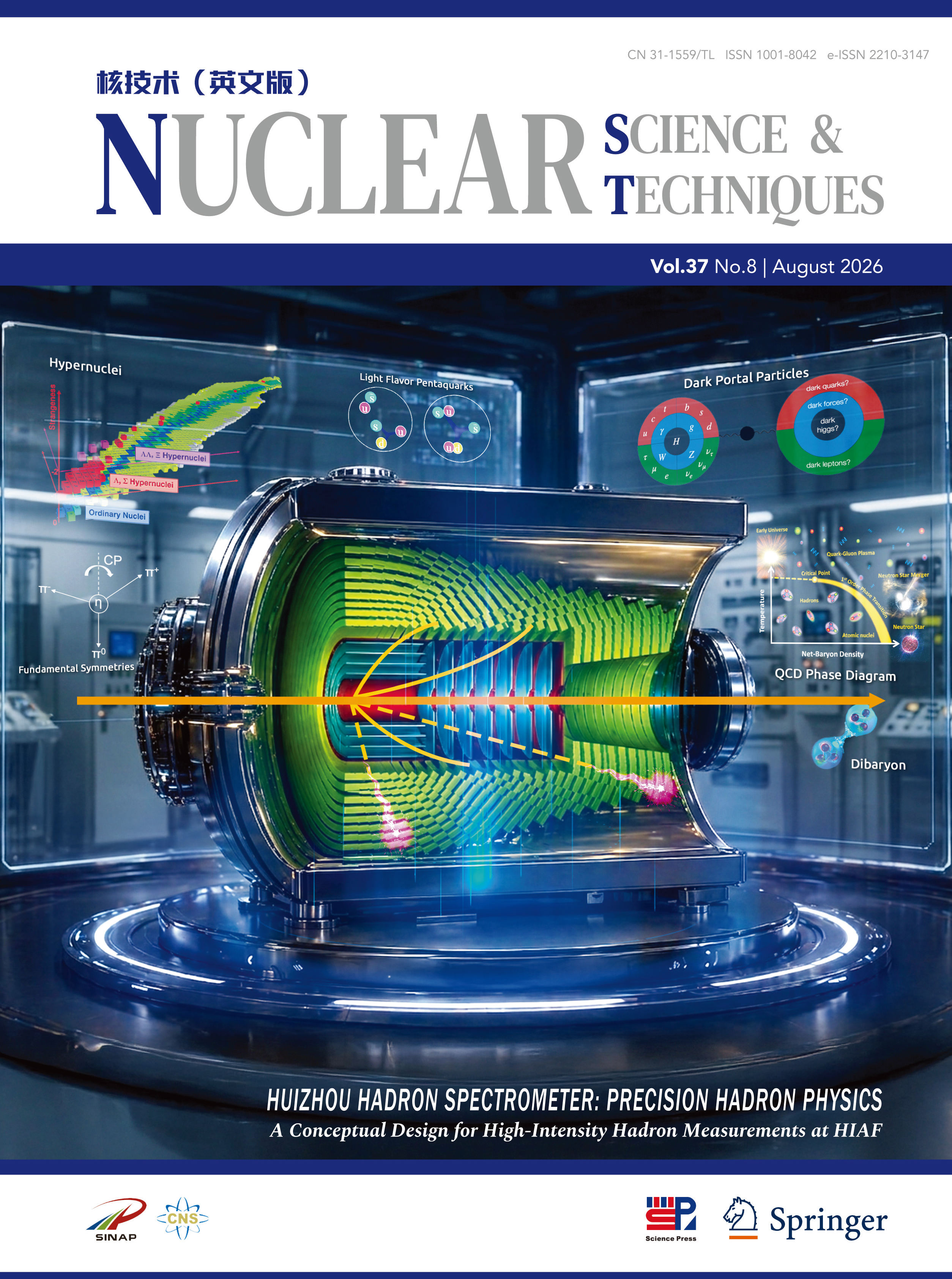
Hai-Bo Yang,Rong Wang,Xiong-Hong He,Hao Qiu,Hong-Xia Huang,Xu-Rong Chen,Yun-Yun Fan,Shuang-Shi Fang,Zhao-Qing Feng,Feng-Kun Guo,Wei-Jia Han,Jun He,Qing-Hua He,Xiao-Lin Kang,Hong-Li Ma,Wei-Hu Ma,Yong-Liang Ma,Norihito Muramatsu,Zaiba Mushtaq,Xiao-Yang Niu,Jia-Lun Ping,Jun Shi,Ye Tian,Qian Wang,Shuai-Chun Wang,Xiao-Yun Wang,Jia-Jun Wu,Chu-Wen Xiao,Ju-Jun Xie,Xie-Yang Yu,Hong-Lin Zhang,Sheng-Hui Zhang,Cheng-Xin Zhao,Kuang-Ta Chao,Qiang Zhao,Bing-Song Zou
The High-Intensity Heavy-Ion Accelerator Facility (HIAF), currently under construction in Huizhou, Guangdong Province, China, is expected to be completed by 2025. This facility will be capable of delivering proton and heavy-ion beams with energies of up to several GeV, thereby providing a versatile platform for advanced fundamental physics research. Key scientific objectives include exploring physics beyond the Standard Model through the search for new particles and interactions, testing fundamental symmetries, investigating exotic hadronic states such as dibaryons, pentaquark states, and multi-strange hypernuclei, conducting precise measurements of hadron and hypernucleus properties, and probing the phase boundary and the critical point of nuclear matter. To facilitate these investigations, we propose the construction of a dedicated experimental apparatus at HIAF — the Huizhou Hadron Spectrometer (HHaS). This paper presents the conceptual design of HHaS, which comprises a solenoid magnet, a five-dimensional silicon pixel tracker, a Low-Gain Avalanche Detector (LGAD) for time-of-flight measurements, and a Cherenkov-scintillation dual-readout electromagnetic calorimeter. The design targets an unprecedented event rate of 1–100 MHz, extensive particle acceptance, a track momentum resolution at the 1% level, an electromagnetic energy resolution of ~3% at 1 GeV, and broad particle-identification capability. Such capabilities position HHaS as a powerful instrument for high-precision experimental studies in particle and nuclear physics. The successful realization of HHaS is expected to strongly promote the development of medium- and high-energy physics research within China.
keyword:High-intensity heavy-ion accelerator facility;Physics beyond the standard model;η meson physics;Light hadron physics;
NUCLEAR PHYSICS AND INTERDISCIPLINARY RESEARCH
Research article 19 May 2026
Yu-Ting Rong,Ping-Mo Liu,Dan Yang,Rong An
Charge radii are sensitive observables for identifying nuclear-structure phenomena across the nuclear chart. In particular, a local decrease in charge radii along an isotopic chain is closely associated with shell effects. In this work, the systematic evolution of charge radii for the isotopic chains with Z=8, 10, 12, 14, and 18 is investigated within the relativistic Hartree-Bogoliubov model. An ansatz for neutron-proton correlations around the Fermi surface is adopted to describe the anomalous behavior of nuclear charge radii. Our results show that neutron-proton pairing corrections around the Fermi surface lead to pronounced increases in the charge radii at N=8, 20, and 28, indicating an enhancement of the corresponding shell closures. The reproduction of the charge radius at N=14 in Mg isotopes is sensitive to the treatment of pairing correlations. The BCS approach overestimates the shell effect, whereas the Bogoliubov quasiparticle transformation, which predicts stronger pairing correlations near the proton Fermi surface, yields better agreement with the experimental data. The deviations between theoretical and experimental values for 25 even-even nuclei show that the neutron-proton pairing correction improves the charge radii calculated with meson-exchange interactions. However, no comparable improvement is obtained for density-dependent effective interactions.
keyword:Charge radii;magic numbers;Neutron-proton pairing correction;sd shell;Nuclear force;
Research article 20 May 2026
Wang-Mei Zha,Ze-Bo Tang,Yan Wang,Rong-Rong Ma,Kai-Feng Shen
Machine-learning techniques are increasingly used in high-energy nuclear physics because they can exploit multivariate correlations more efficiently than conventional cut-based analyses. A central challenge is the construction of training samples that faithfully reproduce the detector response observed in data. Signal samples are usually derived from detector simulations; therefore, mismatches between simulation and data can degrade classifier performance and introduce systematic biases. This work presents two practical correction procedures, namely cumulative distribution function (CDF) mapping and a shift-and-scale transformation, to align simulated signal features with those measured in data. Their performance is demonstrated with J/ψ yield measurements in sNN=200 GeV Ru+Ru and Zr+Zr collisions recorded by STAR. A set of self-consistency tests shows that these procedures substantially suppress the systematic bias associated with data-simulation discrepancies in machine-learning-based signal extraction.
keyword:Machine learning;J/ψ reconstruction;Cumulative distribution function mapping;Shift-and-scale;
Research article 20 May 2026
Wen-Yu Xin,Chun-Ming Yip,Ken’ichi Nomoto,Xian-Fei Zhang,Shao-Lan Bi
Massive stars are significant sites for the weak s-process (ws-process). In metal-rich stars, 22Ne and 16O are, respectively, the main neutron source and poison for the ws-process. In metal-poor stars, however, the abundance of 22Ne is limited by metallicity, so the contribution of 22Ne(α, n)25Mg reaction on the s-process is smaller. Conversely, the 17O(α, n)20Ne reaction becomes more prominent in these stars because of the most abundant 16O at all metallicities. In this study, we calculated the evolution of four metal-poor stars (Z=10-3) for the Zero-Age Main-Sequence (ZAMS) masses of M (ZAMS) = 15, 20, 25, and 30 M⊙ to investigate the effect of reaction rates on the ws-process. We adopt the new 17O(α, n)20Ne and 17O(α, γ)21Ne reaction rates suggested by Best et al. (2013) and 22Ne(α, n)25Mg and 22Ne(α, γ)26Mg reaction rates from Wiescher et al. (2023). The yields of the s-process isotopes with the updated reaction rates are compared with the results using the default reaction rates from JINA REACLIB. We found that the new 17O+α reaction rates enhance the ws-process in all stages, whereas the new 22Ne+α reaction rates enhance the ws-process only in the C and Ne burning stages. Updating these new reaction rates would increase the production of ws-process isotopes by tens of times. We also note that for more massive stars, the enhancement by the new 17O+α reaction rates becomes more significant.
keyword:Nuclear reactions;Supernovae;Massive stars;s-process;Nucleosynthesis;
Research article 22 May 2026
Wen-Jia Huang,Hao-Zhao Liang,Keisuke Fujii
We propose a new set of nuclear mass predictions based on multiple theoretical mass models. By employing Gaussian Process regression with the Matérn kernel, we achieved root-mean square (rms) deviations below 100 keV for the training dataset. The best-performing mass models achieved rms deviations below 150 keV for the new precise mass data from AME2020, whereas the ensemble average showed robust performance across the nuclear chart. Our approach uniquely combines: (1) systematic refinement of eight mass models through their residuals, (2) physics-informed features, including magic numbers, nucleon parity numbers, neutron excess, and nuclear collectivity, and (3) theory-to-theory validation demonstrating robust extrapolation capability. We find that the Matérn kernel provides superior uncertainty quantification compared to the RBF kernel, with a length-scale analysis revealing enhanced inter-nuclei correlations. We provide complete mass predictions for all unknown nuclides in AME2020, offering valuable constraints for nuclear structure studies and astrophysical modeling when used with proper uncertainty propagation.
keyword:Gaussian processes;Mass models;Predictive power;r-process;
Research article 23 May 2026
Pei-Yan Zhang,Hui Sun,Ze-Kun Zhang,Xin Zhang,Zhi-Qiang Chen,Rui Han,Bo Yang,Shakhboz Khasanov,Guo-Yu Tian,Bing-Yan Liu,Fu-Dong Shi,Qin Li,Peng Luo
The neutron transmission spectrum through a high-purity 238U slab (dimensions: 100 mm × 100 mm × 20 mm) irradiated by a broad-spectrum neutron field was measured at 0° using the time-of-flight (TOF) method. The experiment was carried out at the Radioactive Ion Beam Line of the Heavy Ion Research Facility in Lanzhou at the Institute of Modern Physics, Chinese Academy of Sciences. Broad-spectrum neutrons were generated by bombarding a tungsten target with 80.5 MeV/u 12C ions. GEANT4 calculations were performed under the same experimental conditions by combining the INCL++, BIC, and BERT physics models with the evaluated nuclear data libraries ENDF/B-VIII.0, JEFF-3.3, and JENDL-4.0. The calculations reproduce the measured spectrum reasonably well over most of the investigated energy range; however, they overestimate the data below 10 MeV and tend to underestimate the measured yield above 70 MeV. The present results provide benchmark information for validating neutron-transport simulations relevant to accelerator-driven systems.
keyword:Geant4;238U;Neutron transmission spectrum;Broad-spectrum neutrons;
Research article 23 May 2026
Xiao-Hui Sun,He Wang
The present study evaluates the production of new neutron-rich isotopes in the rare-earth region (Z = 61-71) using projectile fragmentation of primary beams at 800 MeV/nucleon at the High-rigidity Radioactive Ion Beam Line (HIRIBL) of the High-Intensity Heavy-ion Accelerator Facility (HIAF). The production potential of various projectiles was evaluated through measured and calculated production cross sections, revealing that 198Pt may offer a clear advantage for accessing this region. With an optimized target thickness, fragmentation of 198Pt could lead to the discovery of about 30 new isotopes in the rare-earth region at HIRIBL, thereby providing a strong opportunity for studies in both nuclear physics and nuclear astrophysics at HIAF.
keyword:HIAF;New neutron-rich isotopes;Rare-earth region;Fragmentation reaction;
Research article 23 May 2026
Xun Chen,De-Fu Hou,Bing Chen,Liqiang Zhu,Xu-Rong Chen
Using a holographic QCD model calibrated through Bayesian inference, we calculate key transport coefficients of the quark-gluon plasma (QGP)–including the drag force, jet quenching parameter, heavy quark diffusion coefficient, and shear and bulk viscosities–within a finite-temperature and finite-density Einstein–Maxwell–dilaton framework, with the phenomenological analysis presented here focused on zero chemical potential. Posterior parameter distributions at the 68% and 95% credible levels, as well as the maximum a posteriori (MAP) estimates, are employed to quantify uncertainties. Our findings indicate that the diffusion coefficient within the Bayesian credible regions aligns with lattice QCD results for T∼1.2Tc to 2Tc, and is consistent with ALICE experimental measurements near Tc. The jet quenching parameter derived from the posterior ensemble is compatible with RHIC and LHC data, while the extracted viscosity trends are consistent with representative phenomenological and holographic results. These results demonstrate the utility of Bayesian-calibrated holography for constraining the nonperturbative transport properties of QCD matter.
keyword:Diffusion coefficient;Holographic QCD;Jet quenching parameter;
NUCLEAR ENERGY SCIENCE AND ENGINEERING
Research article 22 May 2026
Na-Xiu Wang,Chao-Qun Wang,Kai Wang,Qun Yang,Rong-Jian Liang,Xin Yue,Liang-Jie Sun,Wen-Tao Jiang,Zhao-Zhong He
Safety is of paramount importance in nuclear power plants. Accurate and reliable accident diagnosis is essential for ensuring operational safety in reactor systems. The convergence of Industry 4.0 technologies and deep learning methods has emerged as a promising approach for improving the operational safety of nuclear energy systems, particularly in fault detection and diagnosis (FDD) applications. This study proposes a novel adaptive accident diagnosis framework tailored for molten salt reactors (MSRs) based on an enhanced residual convolutional neural network (AM-RCNN). The AM-RCNN incorporates an anti-noise module implemented using the Soft Threshold method, together with an attention mechanism, to improve robustness. Datasets representing eight distinct operational scenarios were generated using the RELAP5-TMSR simulation tool. An appropriate subset of input features for MSR accident diagnosis was selected using Pearson correlation analysis and random forest importance ranking. The models were subsequently trained, validated, optimized, and tested. Comparative analyses with conventional RCNN and CNN architectures demonstrate the diagnostic advantages of the proposed approach. In addition, the integration of Bayesian optimization further enhances the performance of the AM-RCNN. As a contribution to intelligent monitoring research for MSRs, the proposed method provides reliable decision support for nuclear system operation, particularly in autonomous scenarios.
keyword:Molten salt reactors;Bayesian optimization;Accident diagnosis;Feature selection;Deep residual CNN;
Research article 26 May 2026
Xin Tong,Zheng-Yao Li,Tian-Hao Wang,Si-Qin Meng,Jun-Pei Zhang,Li-Jie Hao,Jian Tang,Tian-Yun Wang,Shi-Hao Ruan,Hong-Liang Wang,Mei-Mei Wu,Long Tian,Bin Wang,Ahmed Salman,Lin-Feng He,Dong-Feng Chen
In contrast to conventional neutron imaging by measuring the attenuation contrast, polarized-neutron imaging (PNI) has proven to be a powerful tool for investigating the spatial distribution of magnetic fields inside and around bulk samples owing to the intrinsic magnetic moment of neutrons. This technique benefits from the measurement of the cumulative precession of the neutron polarization passing through a magnetic field. We report the recent development of the PNI capability at the China Advanced Research Reactor (CARR), where two neutron-imaging instruments (thermal and cold) have been established. To further develop and realize the PNI technique, a PNI facility consisting of a double-crystal pyrolytic graphite monochromator, supermirror polarizer with three parallel V-cavities, and an in-situ optically pumped 3He neutron spin filter as a neutron spin analyzer was successfully developed and tested based on an established cold neutron-imaging instrument. This setup will be beneficial for enhancing neutron imaging and neutron optics in CARR in the future.
keyword:Neutron radiography;Magnetic field;Polarized-neutron imaging;Magnetic imaging;Polarizing supermirror;
Research article 30 May 2026
Ding She,Zhong-Kai Sheng,Bing Xia,Hong-Wei Wu,Fu Li,Zuo-Yi Zhang
Online continuous refueling is one of the main features of a pebble-bed high-temperature gas-cooled reactor (PB-HTR). During the normal operation of a PB-HTR, positive reactivity is mainly introduced through refueling, whereas negative reactivity is introduced through depletion. Therefore, evaluating the refueling reactivity coefficient is crucial for the safe and stable operation of PB-HTRs. In this study, the perturbation theory is used to calculate the refueling reactivity coefficient, and the effect of key parameters on the refueling reactivity coefficient is examined based on the HTR-PM equilibrium core. The refueling reactivity introduced into the reactor core is driven by the gradient of the nuclide atomic density, particularly 235U. The neutron flux modulates the spatial distribution of the refueling reactivity. The loading fraction of the fresh fuel directly and positively influences the refueling reactivity coefficient. This study provides comprehensive insights into the effect of these parameters on the refueling of PB-HTRs, paving the way for efficient fuel management.
keyword:Refueling reactivity coefficient;PB-HTR;Perturbation theory;
Published on 20 Aug 2026
